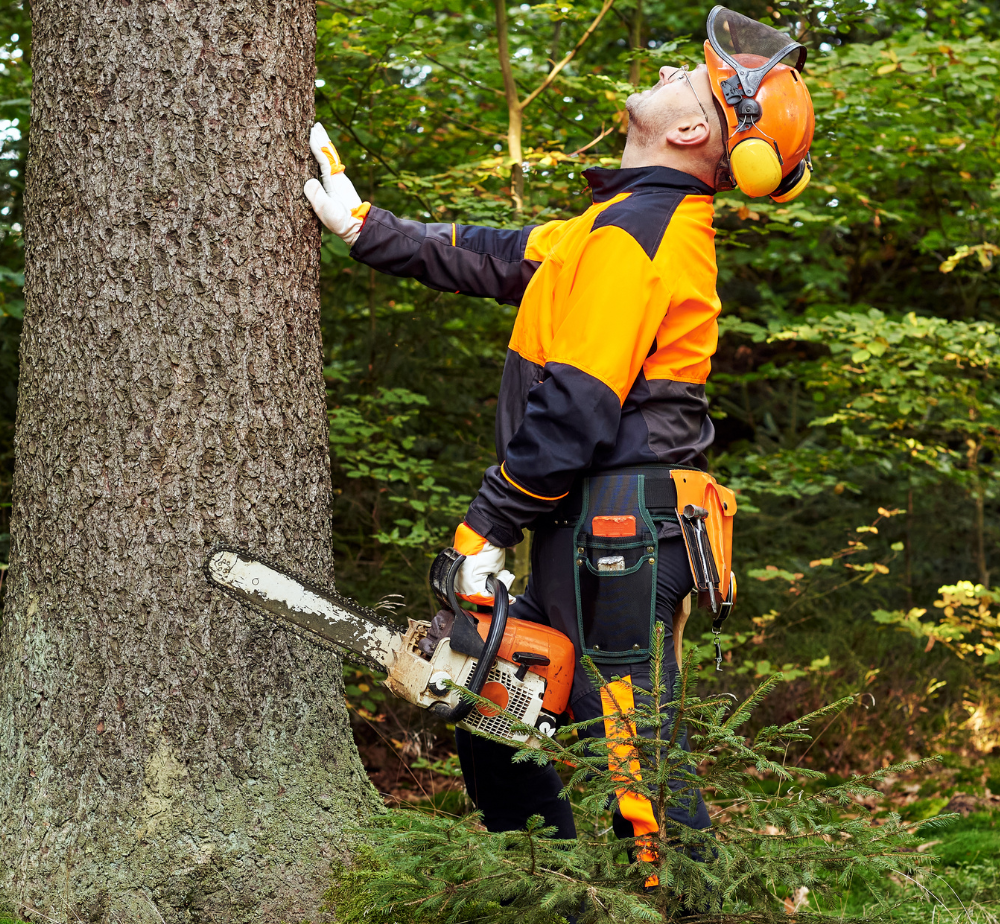
What Is Tree Lopping?
Tree lopping generally refers to cutting back branches, reducing parts of a tree canopy or removing sections of a tree to improve safety, clearance, structure or access. In some cases, people also use the term when they are talking about complete tree removal.
While the wording is common, the work itself needs care. Poor lopping can damage a tree, create weak regrowth or make future branch failure more likely. A professional tree lopping service in Brisbane should assess the tree first and recommend the safest approach, whether that is pruning, trimming, weight reduction, deadwood removal or full removal.
What Does Tree Lopping Involve?
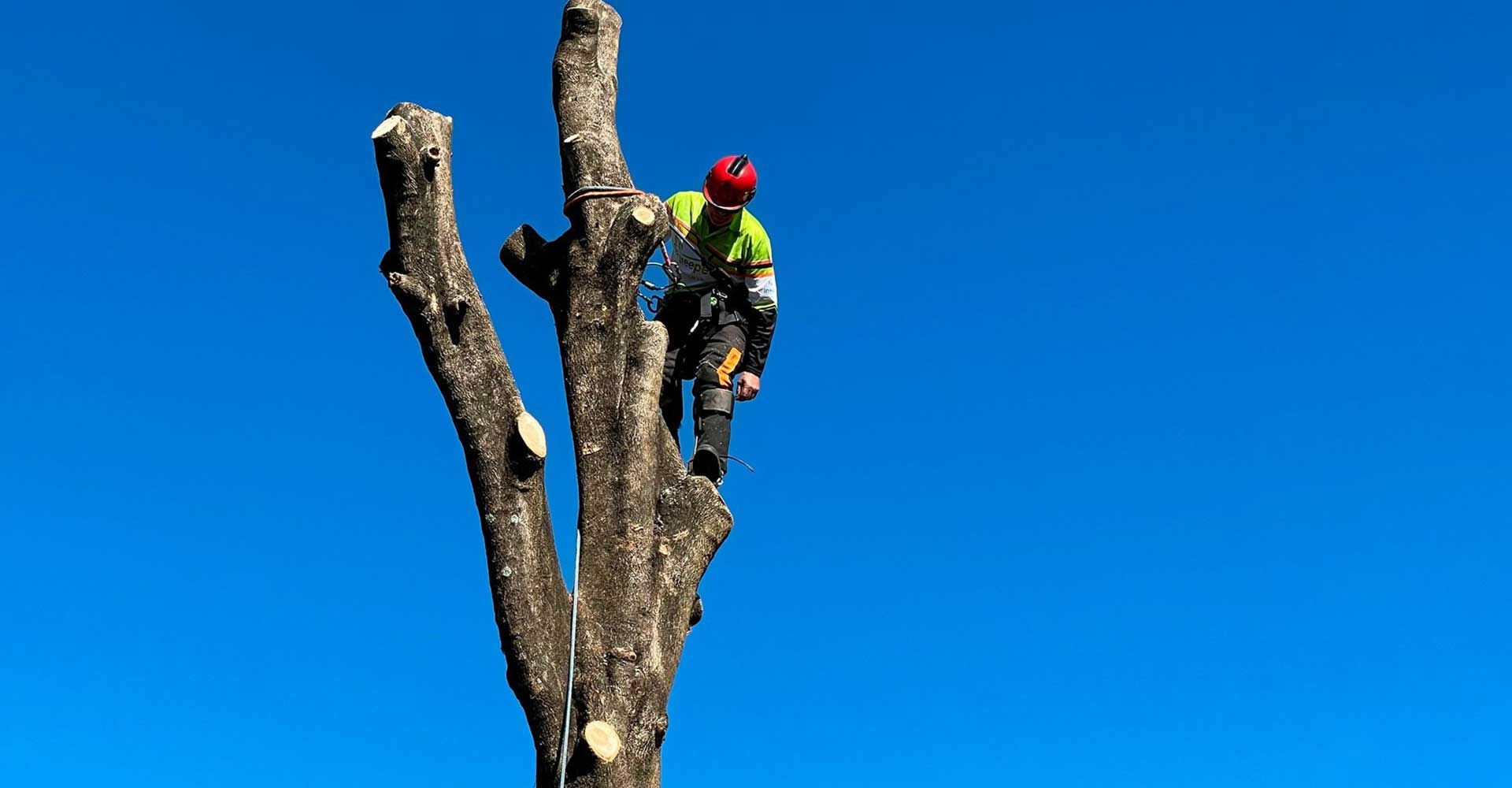
Tree lopping can involve removing selected branches, reducing overgrown limbs, cutting away damaged sections, clearing branches from buildings or, when necessary, removing a tree altogether. The goal should not be to cut as much as possible. The goal should be to make the tree and surrounding property safer while avoiding unnecessary damage.
In a professional setting, tree lopping should start with an assessment. The tree worker or arborist looks at the species, size, health, structure, branch weight, location, access, surrounding property and the reason the work is needed. From there, they can decide whether the tree should be pruned, reduced, thinned, deadwooded or removed.
Important: Not every tree should be heavily lopped. In many cases, selective pruning or trimming is safer and better for the tree. If the tree is diseased, unstable, storm-damaged or growing too close to structures, an arborist-led assessment is the best first step.
Tree Lopping, Tree Pruning and Tree Trimming: Are They the Same?
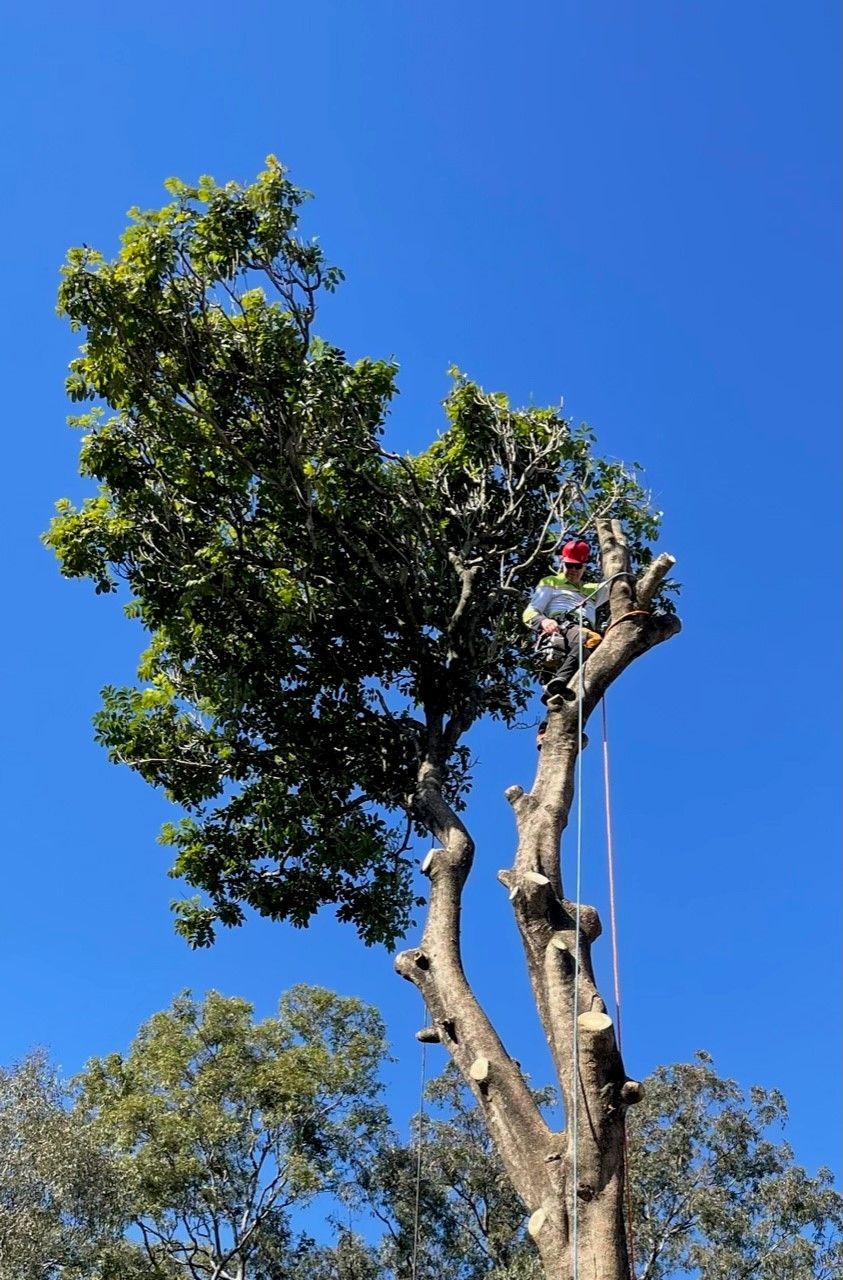
People often use these terms interchangeably, but they can mean slightly different things. Tree pruning is usually more targeted and focused on the tree’s health, structure and long-term growth. Tree trimming often refers to cutting back smaller overgrowth for clearance, appearance or maintenance. Tree lopping is a broader term often used by homeowners when they need branches reduced, cut back or removed.
The safest approach is to describe the problem rather than choosing the service yourself. For example, you might need branches cleared from a roof, deadwood removed, canopy weight reduced, a storm-damaged limb made safe or a tree removed. A qualified tree service can then recommend the correct method.
TreePeeps provides tree trimming and pruning, tree removal and general tree services across Brisbane and surrounding areas.
When Might a Tree Need Lopping?
Tree lopping may be needed for safety, clearance, storm damage, property maintenance or to manage a tree that has outgrown its location. The most important part is understanding why the work is being done and how much should be removed.
Dead, Cracked or Hanging Branches
Branches that are dead, cracked, split or hanging over usable areas can create a safety risk, especially during storms or high wind.
Branches Touching Buildings
Branches growing into roofs, gutters, sheds, fences, solar panels or neighbouring properties may need to be cut back professionally.
Storm-Affected Trees
Heavy rain and wind can leave branches unstable. In urgent cases, professional tree workers may need to make the tree safe quickly.
Diseased or Decaying Areas
Where sections of a tree are diseased, decayed or structurally weak, an arborist can assess whether pruning or removal is appropriate.
Heavy or Overextended Limbs
Some limbs become too heavy or stretched out, increasing the chance of failure. Selective reduction may help reduce risk.
Trees in the Wrong Location
If a tree is damaging structures, affecting access or no longer suitable for the site, full removal may be the safest option.
Is There a Best Time of Year for Tree Lopping?
The best time depends on the reason for the work. If a tree is unsafe, storm-damaged, dead, diseased or creating an immediate risk, it should be assessed as soon as possible. Waiting for the “ideal season” is not worth it when people, property or neighbouring areas may be at risk.
For non-urgent pruning or canopy maintenance, late winter or early spring is often a practical time for many tree species because new growth has not fully started. However, the timing can vary depending on the species, the amount of material being removed and the reason for the work.
If the tree is healthy and the goal is mostly appearance or clearance, a professional can advise when to prune and how much to remove without causing unnecessary stress.
Benefits of Professional Tree Lopping
When done properly, tree lopping or selective branch removal can help manage risk and improve how a property functions. The benefits may include:
- removing dead, diseased or storm-damaged branches
- reducing weight on limbs that may be vulnerable to failure
- improving clearance from roofs, gutters, driveways, fences and neighbouring properties
- helping manage tree shape and canopy spread
- reducing hazards before severe weather
- supporting new growth when pruning is carried out correctly
- making outdoor areas safer and easier to maintain
What Are the Risks of Poor Tree Lopping?
Poor tree lopping can do more harm than good. Removing branches incorrectly can leave large wounds, encourage weak regrowth, expose the tree to pests or disease, and increase the chance of branch failure later. Cutting too much at once can also stress the tree, especially if it is already struggling.
The biggest risk is assuming every tree can be treated the same way. Some species respond poorly to heavy cutting. Some trees have hidden decay or included bark that makes branch removal more complicated. Others may be protected by Council rules, meaning pruning or removal may need to be checked before work starts.
Good tree work is planned, not random. A professional should consider the tree’s health, structure, location and the purpose of the work before making cuts.
How Do I Know If My Trees Need Lopping?
You may need professional advice if your tree has visible defects, has grown too close to structures, has dropped branches, has been damaged in a storm or is causing concerns around safety, access or property damage.
Signs to Look For
- dead or hanging branches
- cracks, splits or cavities in the trunk or limbs
- branches touching roofs, gutters or powerlines
- excessive canopy weight or one-sided growth
- fungal growth, decay or pest activity
- leaning or movement after storms
What a Professional Will Check
- tree species and growth habit
- overall health and structural condition
- access for climbers, equipment and clean-up
- nearby buildings, fences, roads and services
- whether pruning, lopping or removal is best
- whether arborist advice or Council checks are needed
How Tree Lopping Works
Every tree is different, but a professional tree lopping job usually follows a clear process. This helps reduce risk, protect the property and make sure the work is carried out safely.
1. Tree Assessment
The tree is inspected from the ground. The crew looks at the tree’s condition, branch weight, access, hazards and the reason the work is needed.
2. Work Plan
The safest method is chosen. This may involve climbing, rigging, pole saws, chainsaws, lowering branches, machinery or staged removal.
3. Branch Removal
Selected branches are removed or reduced carefully. The aim is to achieve the safety or clearance goal without unnecessary damage.
4. Waste Handling
Branches and green waste are processed, usually with a wood chipper, and the site is cleaned so it is safer and easier to use.
5. Stump Grinding if Needed
If the job involves full removal, stump removal or stump grinding can be carried out after the tree is down.
6. Final Advice
The team can explain any follow-up care, future pruning needs or whether other trees on the property may need attention.
Tools and Equipment Used for Tree Lopping
The tools used depend on the tree size, location and complexity of the job. Small pruning work may only require hand tools, while larger trees can require climbing gear, chainsaws, rigging equipment and chippers.
Common equipment may include pruning shears, loppers, pole saws, chainsaws, climbing equipment, rigging gear, wood chippers and stump grinders. The equipment is only part of the job. The experience of the person using it is what makes the difference.
Tree Services That May Help
If you are not sure whether your tree needs lopping, pruning or removal, TreePeeps can inspect the tree and recommend the most suitable approach.
About TreePeeps
TreePeeps is a Brisbane-based tree services company helping homeowners, businesses and property managers with safe, practical tree work across Brisbane, Logan, Ipswich and the Gold Coast. The team provides tree removal, tree trimming and pruning, stump removal and general tree services, with qualified arborist guidance available when trees need to be assessed for safety, structure, condition or risk.
TreePeeps’ arborist, Jason Wadley, has 12 years of experience in the tree industry. He has held Level 3 Arboriculture for 10 years and a Diploma of Arboriculture for 1.5 years, giving customers access to both hands-on tree work experience and qualified arborist knowledge when making decisions about pruning, removal or tree risk.
Frequently Asked Questions
What is tree lopping?
Tree lopping is the process of cutting back branches, reducing parts of a tree canopy or removing sections of a tree. It is commonly used for safety, clearance, storm damage, tree health issues or property maintenance.
Is tree lopping bad for trees?
Tree lopping can be harmful if it is done poorly or too heavily. Correct pruning and selective branch removal can be helpful, but large or careless cuts can stress the tree and create weak regrowth. It is best to get professional advice before major work.
When is the best time to lop a tree?
If the tree is unsafe, storm-damaged or creating a hazard, it should be assessed as soon as possible. For non-urgent work, late winter or early spring can be suitable for many trees, but timing depends on the species and reason for pruning.
How do I know if my tree needs lopping or removal?
Signs include dead branches, storm damage, cracks, decay, branches touching structures, excessive canopy weight, leaning or safety concerns. A professional tree service can inspect the tree and recommend pruning, lopping or removal.
Can TreePeeps remove the stump as well?
Yes. TreePeeps provides stump removal and stump grinding after tree removal, helping clear the area and make the space safer and easier to use.
Does TreePeeps provide tree lopping outside Brisbane?
Yes. TreePeeps provides tree services across Brisbane, Logan, Ipswich and the Gold Coast, including tree removal, tree trimming and pruning, stump removal and general tree work.
Need a Professional Tree Lopping Service in Brisbane?
TreePeeps can help with tree lopping, tree removal, tree trimming and pruning, stump removal and arborist-led advice across Brisbane and surrounding areas. If you are unsure what your tree needs, our team can inspect it and explain the safest option.
Call TreePeeps on 07 3910 3436