End-of-Winter Tree Care
Preparing Your Trees for the End of Winter in South East Queensland
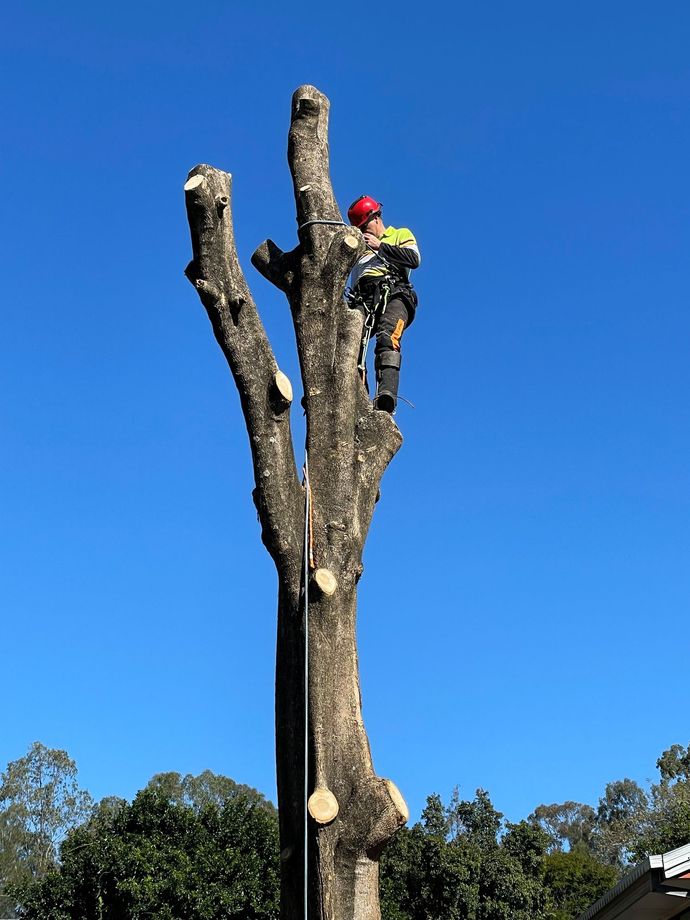
As winter draws to a close in South East Queensland, it is a good time to inspect your trees before warmer weather and spring growth arrive. Professional tree trimming and pruning
can help remove deadwood, improve structure and reduce risks before trees start growing more actively.
Brisbane, Logan, Ipswich, the Gold Coast and surrounding areas often experience mild winters, but trees can still be affected by dry spells, wind, heavy rain, pests and hidden branch damage.
Why Late Winter Is a Smart Time to Check Your Trees
Late winter gives property owners a chance to assess trees before the main spring and summer growing period. It is often easier to spot dead branches, broken limbs, rubbing branches, canopy imbalance and signs of pest or disease activity before growth becomes heavier.
Taking action at the end of winter can also help prepare trees for warmer weather, reduce hazards before storm season and make your yard easier to maintain through spring.
Treepeeps’ arborist, Jason Wadley, has 12 years of tree industry experience, has held Level 3 Arboriculture for 10 years, and has held a Diploma of Arboriculture for 1.5 years. That experience helps guide safer decisions around tree health, pruning, lopping and removal.
Step 1
Inspect for Winter Damage
Walk around your property and look for branches that are cracked, split, hanging, dead or rubbing against each other. Check whether branches are touching roofs, gutters, sheds, fences, solar panels or powerlines.
Also look for signs of decay, fungal growth, cavities, leaning, loose soil around the base of the tree or sudden canopy thinning.
Step 2
Remove Dead or Damaged Branches
Late winter can be a useful time to remove deadwood and damaged branches before spring growth begins. This can improve safety, reduce the chance of falling limbs and help the tree focus energy on healthier growth.
Pruning should be targeted and careful. Avoid harsh cutting or unnecessary canopy removal, especially if the tree is already stressed.
Step 3
Refresh Mulch Around the Tree
A fresh mulch layer can help retain soil moisture, reduce weeds and regulate soil temperature as the weather warms up.
Keep mulch away from the trunk itself. Piling mulch against the trunk can hold moisture against the bark and contribute to rot, pests or disease.
Step 4
Water Wisely Before Spring
South East Queensland can still experience dry periods at the end of winter. Check the soil before assuming your trees have enough water.
Deep, occasional watering is usually better than frequent shallow watering, especially for young or stressed trees that need moisture around the root zone.
Step 5
Check for Pests and Disease
As the weather warms, pests can become more active. Look for chewed leaves, sticky residue, sooty mould, borers, holes in bark, unusual growths, dieback or discoloured foliage.
Early checks can help identify whether the tree needs monitoring, pruning, pest management advice or a closer arborist assessment.
Step 6
Plan Spring Planting Carefully
If you are planning to plant new trees in spring, late winter is a good time to prepare. Think about mature height, root behaviour, distance from homes, drainage, overhead powerlines and nearby structures.
Choosing the right tree for the right place can reduce future problems with invasive roots, blocked gutters, overgrown canopies and property damage.
What Should You Prune at the End of Winter?
Not every tree needs pruning at the end of winter, but it is a good time to look for branches that are likely to create problems once spring growth starts.
- dead, cracked or hanging branches
- branches rubbing against each other
- limbs growing over roofs, gutters or sheds
- branches blocking driveways, paths or access
- low branches that need crown lifting for clearance
- storm-damaged limbs that may fail later
- heavy overgrowth around fences or neighbouring properties
When Tree Work Should Not Wait Until Spring
If a tree is already unsafe, delaying the work can increase the chance of damage when spring storms, strong winds or heavy rain arrive.
- a large dead limb is over a house, driveway or outdoor area
- the tree has visible cracks, cavities, decay or fungal growth
- branches are touching gutters, rooflines, sheds or powerlines
- the tree is leaning or has recently shifted
- storm damage has left branches hanging or unstable
- roots are lifting paths, damaging walls or affecting pipes
If the tree is dangerous or has already failed, Treepeeps can assist with emergency tree removal.
Should You Fertilise at the End of Winter?
Some trees may benefit from soil improvement as winter ends, but fertilising should be done carefully. Fast-release fertilisers can encourage soft growth at the wrong time, especially if the tree is stressed or conditions are dry.
For many established trees, mulch, moisture management and reducing stress are more important than adding fertiliser. If a tree is declining, it is better to understand the cause before applying products to the soil.
End-of-Winter Tree Care Across South East Queensland
Treepeeps provides arborist-led tree services across Brisbane and surrounding areas, including tree lopping Brisbane, tree loppers Logan, tree lopping Ipswich, tree lopping and tree removal on the Gold Coast, and tree removal Beaudesert.
We also help homeowners and property managers in suburbs such as Algester, Ascot, Archerfield, Eagleby
and Bardon
with tree maintenance, pruning, removal and storm preparation.
Treepeeps Can Help Prepare Your Trees for Spring
Whether you need end-of-winter pruning, deadwood removal, tree lopping, tree removal, stump grinding or help assessing a damaged tree, Treepeeps can provide practical advice and a free written quote.
Our services include tree trimming and pruning, tree lopping, tree removal, stump removal, palm removal and emergency tree work.
Need End-of-Winter Tree Care?
Call Treepeeps for a free written quote and arborist-led tree services across South East Queensland.
Call Treepeeps on 07 3910 3436