How to Reduce the Height of a Tree Safely
Reducing the height of a tree is not as simple as cutting the top off. Done correctly, tree height reduction can improve clearance, reduce canopy weight, manage risk and keep the tree looking natural. Done poorly, it can damage the tree, encourage weak regrowth and create future safety issues. If you need help from experienced tree loppers in Brisbane, TreePeeps can assess the tree and recommend the safest approach.
Trees add shade, privacy and natural character to a property, but there are times when a tree becomes too tall, too heavy, too close to a roofline or unsuitable for the space it is growing in.
In these situations, reducing the height of a tree may be considered. The goal should never be to simply “lop the top off”. Proper tree height reduction involves selective pruning, careful planning and an understanding of how the tree will respond after the work is done.
This guide explains the safest and most responsible way to reduce the height of a tree, when crown reduction may be suitable, when tree removal might be the better option, and why professional advice matters for larger or higher-risk trees.
Start by Assessing the Tree
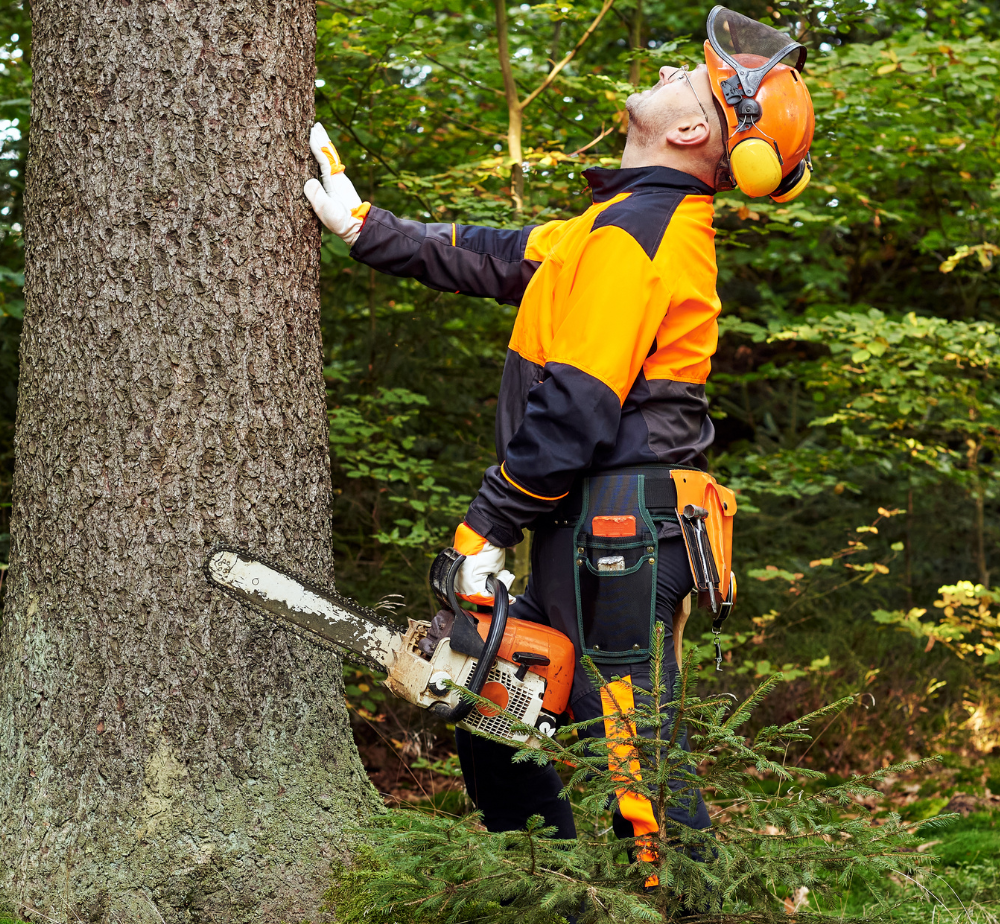
Before reducing the height of any tree, the first step is to understand why the work is needed. A tree that is blocking sunlight may require a different pruning approach to a tree that is leaning over a roof, growing into powerlines or dropping large limbs after storm damage.
Tree Health
Look for signs of decline such as dead branches, sparse foliage, fungal growth, cracks, cavities, termite activity or large sections of dieback. A stressed or damaged tree may not respond well to heavy pruning.
Tree Structure
Check whether the tree has a strong central structure, balanced canopy and sound branch unions. Trees with split trunks, included bark or heavy limbs may require professional assessment before any height reduction work begins.
Location and Clearance
Consider how close the tree is to homes, sheds, fences, retaining walls, pools, driveways, powerlines and neighbouring properties. Tight sites often require controlled pruning or sectional dismantling.
Your Objective
Be clear about the reason for reducing the height. Is it for safety, roof clearance, more light, view management, storm preparation, or because the tree has outgrown the space?
A professional arborist or experienced tree services team can help determine whether the tree should be pruned, reduced, monitored or removed completely.
What Is Crown Reduction?
Crown reduction is one of the most common methods used to reduce the height or spread of a tree. It involves selectively pruning branches back to suitable lateral growth points so the tree is reduced in size while keeping a more natural shape.
The aim is to reduce weight and height without stripping the tree, topping it or leaving large exposed wounds. Correct crown reduction requires judgement because every species responds differently. A gum tree, palm, jacaranda, fig, poinciana or ornamental tree may all require a different approach.
Crown reduction may be suitable when:
- A tree is growing too close to a roofline, gutter or building.
- The canopy is becoming too heavy or overextended.
- You need more clearance around a driveway, path, fence or outdoor area.
- The tree needs to be shaped without removing it completely.
- There is a need to reduce canopy weight before storm season.
- The tree is structurally sound enough to tolerate pruning.
For regular maintenance, TreePeeps provides tree trimming and pruning services across Brisbane and South East Queensland.
Why Tree Topping Is Not the Same as Proper Height Reduction
Tree topping is the practice of cutting large branches or the main stem back to stubs. It may reduce the height quickly, but it often creates long-term problems for the tree and the property owner.
- Weak regrowth: Topping often encourages fast, weakly attached shoots that can become hazardous later.
- Decay risk: Large pruning wounds may not close properly, increasing the risk of decay entering the tree.
- Sunburn and stress: Removing too much canopy can expose bark and internal limbs to harsh sunlight.
- Poor appearance: A topped tree can look unnatural, butchered and unbalanced.
- Higher future costs: Weak regrowth often needs repeated maintenance, making the “quick fix” more expensive over time.
How Much Height Can You Safely Remove?
There is no single answer that applies to every tree. The amount of height that can be safely removed depends on the tree species, age, health, structure and the amount of live canopy remaining after pruning.
A commonly used principle is to avoid removing too much live canopy in one session. Heavy reductions can shock the tree, reduce energy production and trigger unstable regrowth. In many cases, staged pruning over time may be healthier than one aggressive cutback.
Small Trees
Smaller trees may be easier to shape, but poor cuts can still affect structure. Young trees are often better managed through formative pruning rather than heavy reduction.
Mature Trees
Mature trees need careful assessment. Removing too much canopy can increase stress and may reduce the tree’s ability to recover.
Problem Trees
If a tree is already unstable, diseased or storm-damaged, reduction may not be suitable. In some cases, tree removal may be safer.
Best Practices for Reducing Tree Height
Reducing tree height should be done carefully, using proper pruning methods and suitable equipment. The following best practices help protect both the tree and the property.
| Best Practice | Why It Matters |
|---|---|
| Prune back to suitable lateral branches | This helps maintain a more natural shape and avoids leaving large, unsightly stubs. |
| Avoid removing too much canopy at once | Excessive canopy loss can stress the tree and increase the risk of weak regrowth. |
| Remove dead, damaged or diseased branches first | This improves safety, reduces risk and may reduce the amount of live canopy that needs to be cut. |
| Use clean, sharp and suitable equipment | Correct equipment helps make cleaner cuts and reduces unnecessary damage. |
| Consider branch weight and direction of fall | Branches may need to be lowered by rope rather than simply cut and dropped. |
| Plan the clean-up | Branches, timber, leaves and woodchips can create a large amount of green waste. |
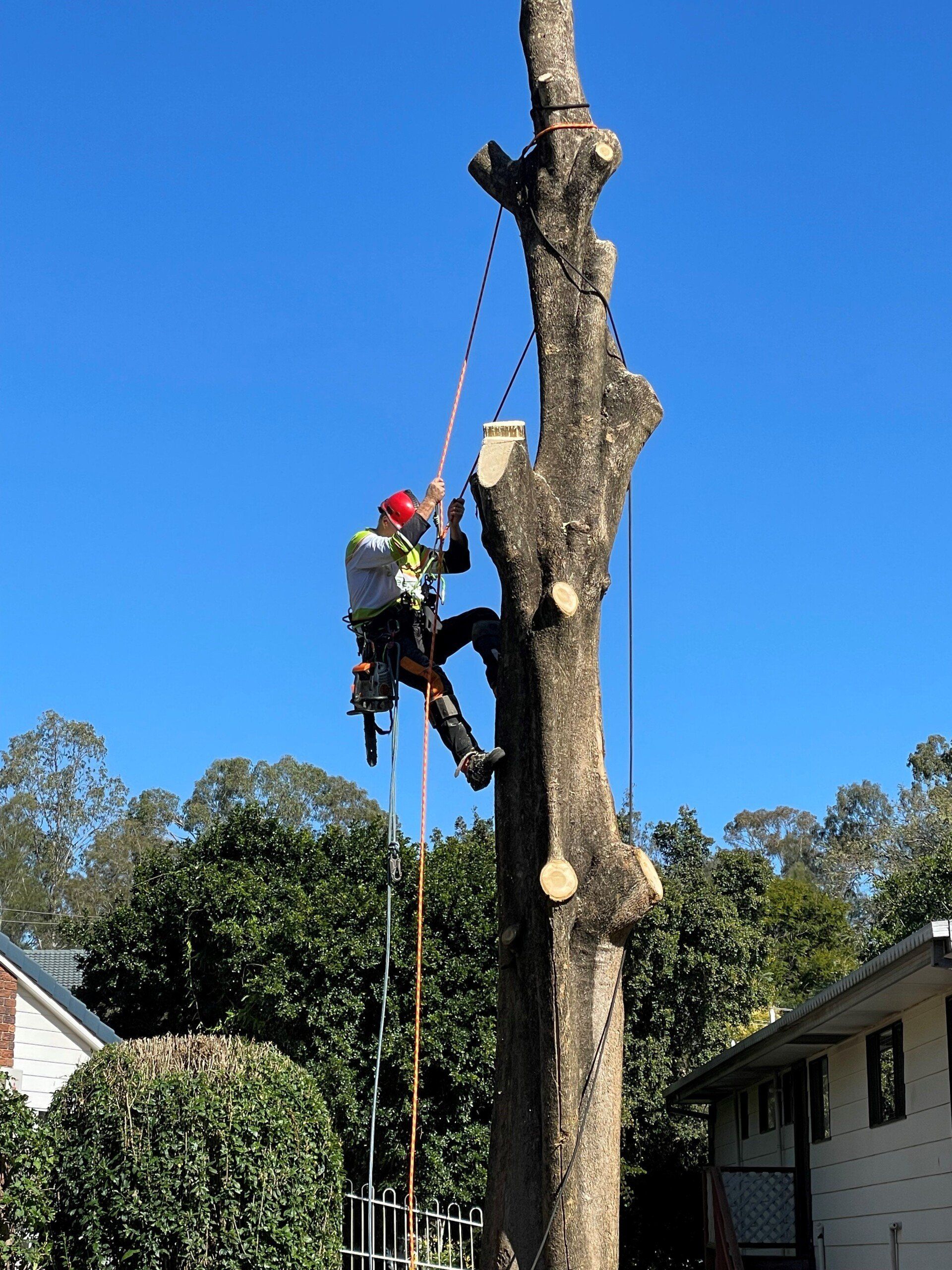
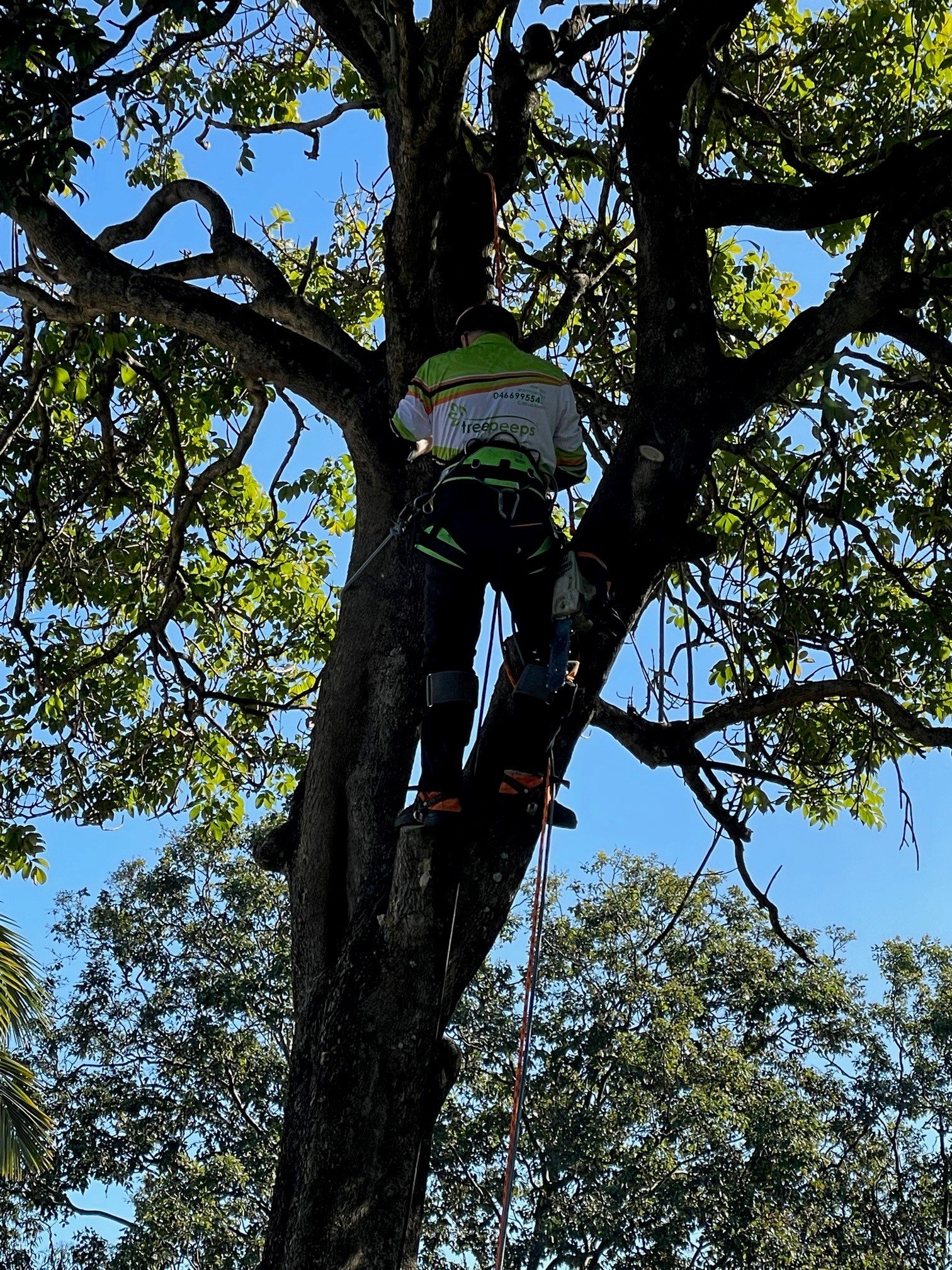
For larger trees, tight access sites or trees near structures, professional equipment and experienced climbers may be required to complete the work safely.
When Tree Removal Is Better Than Height Reduction
Sometimes reducing the height of a tree is not the best long-term option. If a tree has outgrown the space, is structurally compromised or would need to be cut back so heavily that it becomes unsafe or unattractive, complete removal may be the more practical solution.
Tree Removal May Be Safer If:
- The tree is dead, dying or badly decayed.
- The trunk is split or structurally unstable.
- The tree is leaning towards a home, shed, road or neighbouring property.
- Storm damage has left major limbs hanging or unstable.
- Height reduction would remove too much of the canopy.
- The tree is unsuitable for the space it is growing in.
Pruning May Be Suitable If:
- The tree is healthy and structurally sound.
- Only moderate height or spread reduction is needed.
- Branches need clearance from a roof, fence or driveway.
- The tree can retain enough live canopy after pruning.
- The goal is ongoing maintenance rather than removal.
- The tree contributes shade, privacy or street appeal.
If you are comparing options or trying to understand tree removal cost in Brisbane, an onsite quote is usually the most accurate way to understand what is involved.
Local Tree Work Across Brisbane and Surrounding Areas
Tree height reduction, pruning and removal can vary depending on the site. A tree on a flat, open block in Brisbane may be much easier to manage than a tree on a steep property, narrow access block or heavily built-up backyard.
TreePeeps works across a wide range of locations, including Brisbane, Logan, Ipswich, the Gold Coast, Scenic Rim and surrounding suburbs. We regularly assist with tree pruning, storm clean-up, palm work, stump grinding and tree removal in residential, commercial and property management settings.
Brisbane Tree Work
From general pruning to complex tree removal in Brisbane suburbs, our team can assess access, surrounding structures and the safest way to complete the work.
Logan and Jimboomba
We assist with tree lopping, tree removal and stump grinding across Logan and surrounding areas, including tree removal in Jimboomba and stump grinding where required.
Ipswich, Scenic Rim and Beyond
For larger blocks, acreage properties and regional sites, we can help with tree lopping, tree removal and tree management, including tree lopping in the Scenic Rim.
We also assist with location-specific tree work including tree removal in Alderley, tree removal in Forest Lake, tree removal in Burpengary, tree removal in Beaudesert and tree removal in Archerfield.
Should You Do Tree Height Reduction Yourself?
Small pruning jobs from ground level may be manageable for some property owners, but reducing the height of a larger tree is very different. Once ladders, chainsaws, climbing, heavy branches or nearby structures are involved, the risk increases quickly.
DIY tree work can be dangerous because branches may fall unpredictably, ladders can shift, cuts can split under load and the tree may react differently once weight is removed. Professional tree workers use ropes, rigging, climbing systems, wood chippers and controlled cutting methods to manage these risks.
Call a professional if:
- The branches are above shoulder height or require a ladder.
- The tree is close to a roof, fence, pool, road or powerline.
- The tree is large, leaning, cracked or storm-damaged.
- Large branches need to be lowered rather than dropped.
- You are unsure how much canopy can safely be removed.
- You need stump removal or full tree removal after pruning.
For trees that need proper assessment, a professional arborist can also help determine whether pruning, reduction or removal is the right option.
Need Help Reducing the Height of a Tree?
If a tree on your property is too tall, too close to a structure or becoming difficult to manage, TreePeeps can inspect it and explain your options clearly.
We provide tree trimming, pruning, height reduction, tree removal, palm removal, stump removal and emergency tree services across Brisbane, Logan, Ipswich, the Gold Coast and surrounding areas.
Related Tree Services
Need help with another tree service? Explore our related services below.
Tree Height Reduction FAQs
Can you reduce the height of a tree without killing it?
Yes, in many cases a tree can be reduced in height without killing it, but it must be done carefully. Proper crown reduction removes selected branches while retaining enough healthy canopy for the tree to continue growing.
Is topping a tree the same as reducing its height?
No. Tree topping usually involves cutting large branches or stems back to stubs, which can damage the tree and encourage weak regrowth. Proper height reduction uses selective pruning to reduce size while maintaining structure.
How much of a tree can be cut back safely?
The safe amount depends on the tree species, age, health, structure and the reason for pruning. Removing too much live canopy in one session can stress the tree, so larger reductions may need to be staged.
When is tree removal better than pruning?
Tree removal may be better if the tree is dead, badly decayed, structurally unstable, storm-damaged, too close to buildings or unsuitable for the space. TreePeeps can inspect the tree and explain whether pruning or removal is more appropriate.
Can TreePeeps help with tree height reduction in Brisbane?
Yes. TreePeeps Tree Services provides tree pruning, height reduction, tree trimming, tree removal and stump removal across Brisbane, Logan, Ipswich, the Gold Coast and surrounding areas.
Do you offer stump removal after tree removal?
Yes. If a tree is removed completely, TreePeeps can also assist with stump removal or stump grinding to help clear the area and make the space easier to use.