7 Signs Your Trees Need Professional Trimming Before Storm Season
One of the most common questions we hear from homeowners is, "Does this tree actually need trimming, or can I leave it for another year?"
The answer depends on the tree, its condition and where it is growing. While some trees can go years without needing major work, others can quickly become a safety risk if they are left unmanaged. Branches become heavier, deadwood develops, canopies become overcrowded and limbs start extending over roofs, fences, driveways and neighbouring properties.
At Treepeeps, we inspect and maintain trees throughout Brisbane and South East Queensland every week. In many cases, a simple tree trimming and pruning program can improve the health of the tree while reducing future maintenance costs. In other cases, identifying problems early can prevent emergency callouts after storms.
If you are wondering whether it is time to have your trees professionally assessed, here are seven signs we regularly see on residential and commercial properties.
Treepeeps Tip: Waiting until a branch breaks is almost always the most expensive time to deal with a tree. Preventative pruning is usually safer, more affordable and less stressful for the tree.
1. Dead Branches Are Still Hanging in the Tree
Deadwood is one of the first things our arborists look for during a tree inspection. Dead branches may stay lodged in the canopy for months before eventually falling during windy weather or storm activity.
We have removed dead branches from trees over homes, children’s play areas, driveways, pools and outdoor entertaining spaces. In many cases, the property owner had no idea the branch was already dead until it was pointed out during an inspection.
Removing deadwood improves safety while allowing the tree to redirect energy into healthy growth.
2. Branches Are Getting Too Close to Your Home
Branches touching roofs, gutters, solar panels, sheds or fences are one of the most common reasons homeowners contact Treepeeps.
As trees continue to grow, small overhangs can quickly become large structural branches that are far more expensive to manage later. Regular trimming helps maintain safe clearances while retaining the natural appearance of the tree.
3. The Canopy Has Become Too Dense
A very dense canopy can block light, reduce airflow and place extra weight through the tree. During storms, dense foliage can also catch more wind, increasing stress on weak or overextended branches.
Selective pruning can reduce excess density without stripping the tree bare. The goal is to improve structure and airflow while retaining the tree’s natural form.
4. Heavy Branches Are Hanging Over Driveways or Walkways
Any branch over a driveway, footpath, pool area or outdoor living space needs to be treated carefully. These are areas where people, cars and structures are regularly underneath the tree.
If branches are sagging, cracked, rubbing or unusually heavy, trimming may be needed to reduce the risk of failure.
5. The Tree Looks Uneven or Poorly Balanced
Trees do not always grow evenly. Some develop more weight on one side due to light direction, storm damage, previous poor pruning or competition from nearby trees.
A poorly balanced tree can place extra pressure on certain limbs or the trunk. In some cases, canopy reduction or structural pruning can improve balance and reduce risk.
6. Storm Season Is Approaching
South East Queensland storms can expose tree problems quickly. Heavy rain, strong winds and saturated ground can all increase the chance of branch failure.
Before storm season, it is sensible to look for deadwood, cracked limbs, heavy overhangs, poor structure and branches close to buildings or powerlines.
Preventative pruning is usually far less stressful than emergency tree work after damage has occurred.
7. The Tree Has Not Been Maintained for Years
If a tree has not been trimmed, assessed or maintained for several years, it may have hidden issues that are not obvious from the ground.
This is especially true for large trees, trees close to homes and trees in high-traffic areas. A professional inspection can help determine whether the tree needs pruning, deadwood removal, canopy reduction or further assessment.
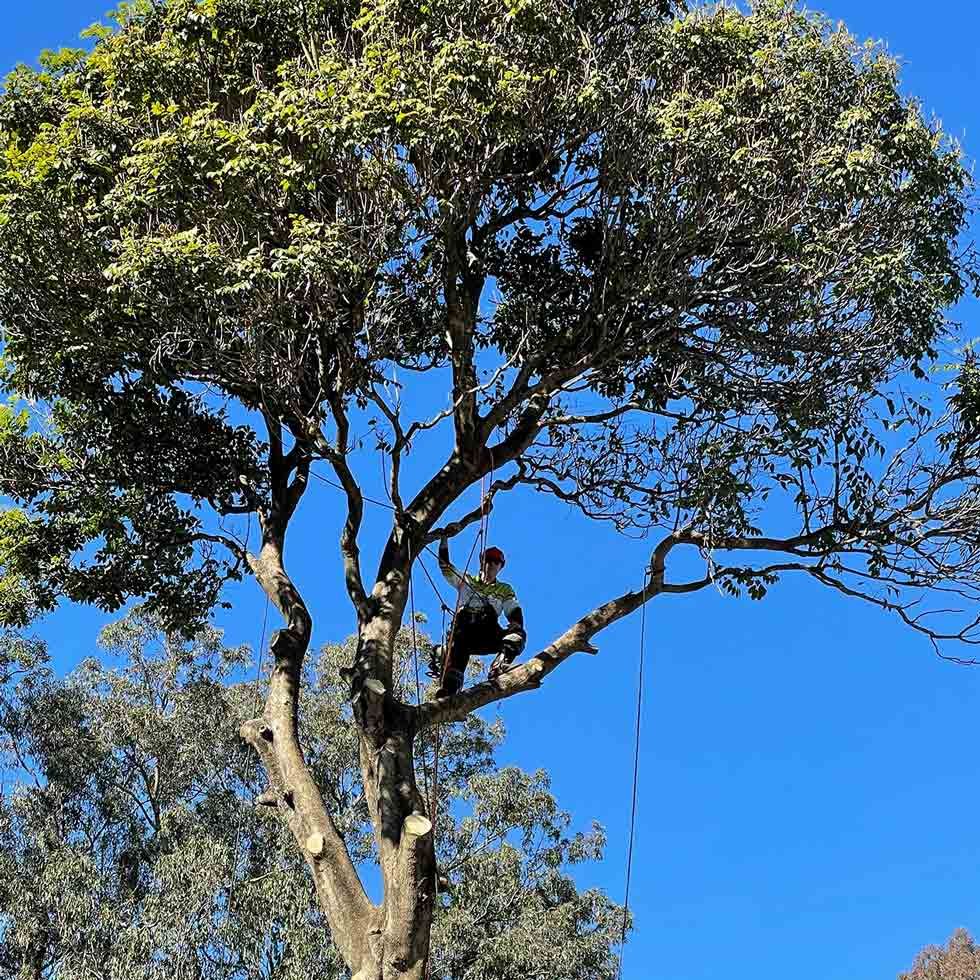
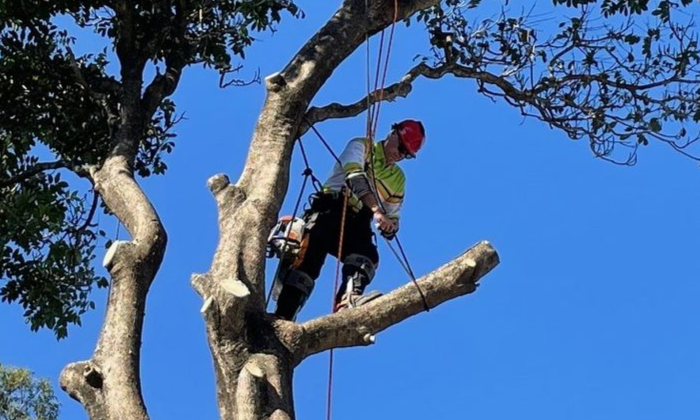
Our experienced tree climbers can assess the condition of your trees and recommend whether trimming, reduction or removal is the right option.
Tree Trimming vs Tree Removal
| Tree Trimming May Be Best | Tree Removal May Be Best |
|---|---|
| The tree is healthy but overgrown | The tree is dead or severely declining |
| Branches need clearance from structures | The tree is structurally unsafe |
| Deadwood or excess weight needs removal | The tree is too close to buildings or services |
| The tree provides shade, privacy or value | Ongoing risk outweighs the benefit of keeping it |
Can Every Tree Be Trimmed?
Not every tree should be trimmed heavily. Some trees respond poorly to aggressive pruning, and poor cuts can create decay, weak regrowth and long-term structural problems.
Tree trimming should always consider the species, age, condition and location of the tree. Professional pruning is generally guided by AS 4373 – Pruning of Amenity Trees, which helps protect tree health and structure.
If a tree is already unstable, badly damaged or declining, tree removal may be safer than trying to reduce it.
Professional Tree Trimming Across South East Queensland
Treepeeps provides tree trimming, pruning, canopy reduction and removal services across Brisbane and surrounding areas.
We also provide local tree services across Logan, Ipswich and the Gold Coast.
Need Your Trees Checked?
Treepeeps provides professional tree loppers Brisbane services, including tree trimming, pruning, canopy reduction and tree removal.